As Christians we know that taking daily devotional time with God every day is essential to our spiritual health. Just as we need to eat and drink physical food to keep our body healthy, so we need the Bread of Life and the Living Water to thrive spiritually.
But what do we do with that time? There are six essential elements to our morning quiet time. Whether you have just a few minutes, or an hour or more, your time with God should touch each of these. They are:
- Worship
- Study
- Meditate
- Ask
- Thank
- Respond
In this article I am going to discuss each of them briefly and suggest some ways to build them into your daily devotional time. In future articles we will go into more detail on each of them.
Start Your Daily Devotional Time with Worship
God does not ask us to worship Him because he has a weak ego! We worship Him because it aligns our spirit with reality. The truth is that God is all-powerful, all-knowing, protecting, loving, creative and so much more. But we live life as if He were weak and disconnected, or angry and punishing.

Our time of worship re-aligns us with the truth of Who He Is and who we are in relationship to Him.
Many of us have participated in worship times in a church. The music starts and we sing the hymns and choruses that have been selected for us.
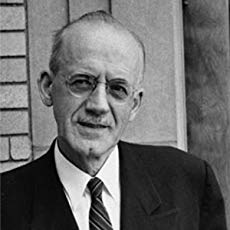
But in our personal devotional time, we may not know where to start. That’s why it is always helpful to have a collection of hymns or psalms set aside for this purpose. Dietrich Bonhoeffer taught his students to pray through the psalms. Most of the psalms make great starters for worship. A.W. Tozer used church hymnals as a source of worship starters for his daily devotional time.
Take some time, perhaps during your study time (described later) to select some favorite psalms and hymns to have ready for you when you start your day.
Notice these are starters. Your creative spirit chooses where to go with it. Select a favorite verse. Repeat it aloud, sing it even. Then rephrase it, expand it, pray it back to God. Tell God how amazing He is. Take the time to confess your own failings and how much you need His forgiveness, mercy, strength. Make it a prayer of alignment and agreement with the God of the Universe.
How to build private worship into your daily devotional life.
A Time to Study

Now that your heart is in the right place, you can feed the mind. Bible study and reading are an essential piece of your daily devotional time.
Your study time is a chance to expand your understanding. Who is God? What has he said? How have other people related to Him? What is your role? So many questions, so little time!

What you learn here becomes the source of worship and meditation. Study also provides the framework for your prayer requests and can guide you in how you should respond to God. It is an essential element of your intentional time with God.
The simplest form of study is just reading the Word of God. This should not be random, but intentional.
Choose a book and read all the way through it, breaking it into one or two chapters a day, or more if you have more time. But don’t be in a hurry with this. Read until you find something that you need to think about, pray about, meditate on. Then stop there for a while.
This is not a speed competition. It is a time to stretch your mind and your heart with whatever God has for you today.
Although the Bible itself takes priority over every other writing, it is helpful to explore the great devotional authors that have gone before us. A couple of my favorites are A.W. Tozer and Hannah Whithall Smith. They have spent time with God and He inspired them to tell us about it. I encourage you to take time to read great authors.
If you have more time, you will want to get more methodical about Bible Study, analyzing the text and the context using one of the many techniques taught by Bible teachers. I will go into detail on that in a later article.
Christian Meditation is Also a Part of Your Daily Devotional Time

One Christian devotional practice that is returning to us recently is Christian Meditation. The secular interest in meditation, for the purposes of relaxing and feeling good, has attracted attention to ancient teachings of Christian Meditation as well.
However, we need to be very specific about the differences between Christian Meditation and the Eastern Yogi style of meditation that came to this country through modern Hindu teachers.
What is the difference between Christian meditation and eastern meditation?
Any time you hear a meditation teacher tell you to “empty your mind” you know you are in a bad place! Likewise, the repetition of meaningless phrases, or mantras, is a hint that you are entering a cosmic void. These practices are useless at best, and at worst leave you open to the entrance of evil spirits.
We do not need to join with the great cosmic unconscious. We need to connect with God the Father, a real person.
24 “When the unclean spirit has gone out of a person, it passes through waterless places seeking rest, and finding none it says, ‘I will return to my house from which I came.’ 25 And when it comes, it finds the house swept and put in order. 26 Then it goes and brings seven other spirits more evil than itself, and they enter and dwell there. And the last state of that person is worse than the first.”
Luke 11:24-26 (ESV)
The meditation taught by ancient Christian teachers, and modern ones, is based on turning our focus to some essential truth, and embedding it deeply into our subconscious. In this way, we not only “know the truth”, but we “do the truth.”
But be doers of the word, and not hearers only, deceiving yourselves. 23 For if anyone is a hearer of the word and not a doer, he is like a man who looks intently at his natural face in a mirror. 24 For he looks at himself and goes away and at once forgets what he was like. 25 But the one who looks into the perfect law, the law of liberty, and perseveres, being no hearer who forgets but a doer who acts, he will be blessed in his doing.
James 1:22-25 (ESV)
For example, if we want to reduce fear and anxiety in our lives, we might meditate on Jeremiah 29:11-13 about God’s plans for us. We need to believe that God has good plans for us that will not be thwarted by whatever chaos we see in our world. And that those plans are for our good! The more we are sure of that, the less we fear.
So What is Christian Meditation?
There are many techniques of how to meditate in a Christian manner, but they are all variations on a theme. We pick a verse, or a word, or a picture and play with it in our minds. We might repeat it many times. (This is not vain repetition of empty phrases but intentional repetition of very important phrases). We might rephrase it, write it down, draw mind maps about it, turn it into a prayer, or all of the above.
One technique I have been using for my own meditation lately, is to take a verse I want to memorize and focus my meditation on that. So I write it down a couple of times, read it out loud many times, pick out some keywords and focus on them for a while.
This approach, combined with actively studying the verse (see above on How to Study), embeds it into my memory and makes it available throughout the day and as I am drifting off to sleep. Marvelous! Take a look at the article about Memorizing to Meditate for more info.
Now We Can Ask
James says that we do not have because we do not ask. And if we do ask, we ask wrongly, to spend it on ourselves.
You do not have, because you do not ask. 3 You ask and do not receive, because you ask wrongly, to spend it on your passions.
James 4:2-3 (ESV)
This is why we save our prayer of asking for later in our devotional time. We need to align our hearts with God’s heart; his priorities become ours. THEN we know better how to pray. We ask for what we need, and even what we want, because what we want is aligned with what God wants. The more we worship, the more we study, the more we meditate, the more true that alignment becomes.
We are told to ask for what we need (Luke 11:3), and to pray for others.
First of all, then, I urge that supplications, prayers, intercessions, and thanksgivings be made for all people, 2 for kings and all who are in high positions, that we may lead a peaceful and quiet life, godly and dignified in every way.
1 Timothy 2:1-2 (ESV)

What do we pray for?
We pray for ourselves
So what do we pray for? We pray for ourselves, because God wants us to know we depend on Him, and to give Him credit for our lives. We pray for our health and daily bread. Our own spiritual growth. The presence of the Spirit in our lives.
We pray for our family and freinds
Then we expand the prayer to our family and friends. The more specific we can be, the better. And of course that prayer comes with asking God to show us how WE can be the answer.
We pray for the world
And we pray for our nation and the world. This is the hardest area to know God’s will, but sometimes we have to be a bit general in our prayer. We do know that God desires that all people come to Him, and asks us to cooperate with that. We might record the prayers of various missionaries we have contact with.
I will say it again, the more we walk with God and listen to Him, the clearer and more specific our prayer can be. When you are led to a specific prayer, be sure to record it so you can go back to it over many days. Persistence in prayer is essential (Remember the story about the widow asking the judge for justice? Luke 18:1-8)
Christians Understand Gratitude
There has been a trend lately towards “gratitude”. I have been a bit perplexed by that, I have to admit. For someone who has no faith, no belief in a loving God who cares for them, who are they thanking? Who are they grateful to? Who provided the goods? In truth, for a non-believer, gratitude is really nothing more than “thinking positively”, which is better than thinking negatively, but not by much.

But Christians understand gratitude. We thank someone in particular for something in particular. So not only does our active gratitude help us think positively, it builds our faith and our love relationship with the Father.
Jesus was quite specific about needing to be thankful. He healed 10 lepers, but only one returned to thank Him (Luke 17:11-19).
What is the purpose of gratitude?
Again, Jesus does not need us to feed His ego by thanking Him. He wants us to be conscious of the source of all good things. He wants to build our faith. That happens when we recognize that each gift in our life comes from Him. If we remember His blessings from yesterday and last year, we are more able to ask and trust today. It is all about growing our faith.
Intentional gratitude?
One technique I have started to use is a “gratitude journal”. On a separate page in my journal I record every blessing I can think of. I might try for 10 a day, or sit for 10 minutes and see how many I can write. This is an exercise in remembering and it is an amazing lift to your spirit.
So even though the secular world has learned something about gratitude, the Christian has a lot to teach them. Try it! True gratitude changes everything.
How Should I Respond?
Choosing our response is the best way to end our quiet time with God. We end our daily devotional by agreeing with God about our next steps.
I may already know, after everything that came before, what I need to do today. Do I need to ask for help on an attitude that keeps popping up? Do I need to call my Dad? Maybe I need to go for a walk and get some exercise.
The leading of the Spirit is often very specific. We become more in tune with it during our quiet time. The response you choose may not sound like a Spiritual voice, but just your own mind making a choice about what you learned.
Do not discount that as not spiritual. The spirit speaks with a still, quiet voice. Often He just directs our thinking in the way it should go. Make a conscious decision on what your next step is and take it.
He makes me lie down in green pastures.
Psalm 23:2-3 (ESV)
He leads me beside still waters.
He restores my soul.
He leads me in paths of righteousness
for his name’s sake.
Coming Soon – The Drawn To Joy Prayer Journal
I have had a couple of people ask me for sample pages of my prayer journal. It takes a bit of time to create it as a PDF, but I am working now on making those journal pages available as a free download.
If this is something you wold be interested in seeing, you can comment here on this page. Another way to connect with me is to go to my page on Facebook and comment on the post there. I would love to know how many people are interested in this free download.
Do you have a personal daily devotional practice that has made a difference in your walk with God? We would love to hear about it! Again, comment below, or on the facebook post about this article.